

Sky Vegas casino Plinko
Introduction
Plinko is one of those casino formats that looks almost too simple to be interesting. You drop a ball, it bounces through a field of pegs, and it lands in a payout slot at the bottom. That is the whole visual idea. Yet in practice, Sky vegas casino Plinko draws attention for a reason: the simplicity of the screen hides a playing experience that can feel tense, fast and highly variable from one session to the next.
When I look at Plinko as a gambling product rather than as a trend, what stands out is not just the presentation. It is the way the game compresses decision-making into a few clear controls: stake size, number of rows in some versions, and most importantly the chosen risk level. Those settings shape the session more than many players expect. A low-risk setup can feel almost steady, while a high-risk configuration can turn the same board into a sharp, swing-heavy experience where long dry spells are part of the logic.
That is why a proper Sky vegas casino Plinko review should not stop at saying the game is easy to understand. It is easy to enter, yes. It is not always easy to read correctly. The interface suggests light entertainment, but the underlying payout distribution can create a very different emotional rhythm depending on how the board is configured. For a UK player deciding whether to try Plinko, that distinction matters more than the visual design.
What Plinko is and why it keeps players watching
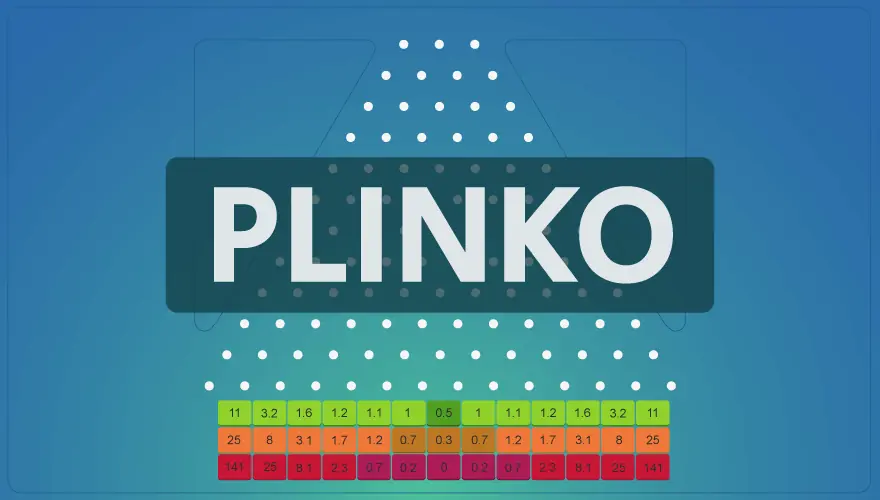
At its core, Plinko is a ball-drop casino game built around randomness and payout zones. A ball is released from the top of a vertical board filled with pegs. Every collision nudges it left or right until it reaches one of the multiplier slots at the bottom. Your return is determined by where it lands. That structure is much closer to a probability toy or a statistical demo than to a traditional reel-based slot, and that difference is a big part of the appeal.
What makes Plinko so noticeable is the way it turns chance into something visible. In a slot, the result appears after a spin and the internal math stays mostly hidden. In Plinko, the route itself becomes part of the entertainment. Players can watch the ball bounce, hesitate, drift toward the centre, or flirt with the far edges where the larger multipliers usually sit. Even though the outcome is still governed by random number generation, the eye reads the journey as drama. That visual suspense is one of the game’s strongest hooks.
I would also point out something that many standard reviews miss: Plinko creates anticipation in a different way from reels or cards. It does not build tension through symbols, best Sky Vegas Casino bonus page for UK players rounds or dealer interaction. It builds tension through trajectory. The ball seems close to a big multiplier more often than it actually reaches one. That gap between “almost there” and “not quite” is a major part of why the format is sticky.
- Immediate readability: even first-time players understand the objective within seconds.
- Visible randomness: the bounce path makes chance feel active rather than hidden.
- Fast repetition: rounds are short, so players can quickly see how settings affect outcomes.
- Risk customisation: the same board can feel mild or aggressive depending on configuration.
How the Plinko mechanic actually works in play
The basic mechanic is simple, but the playing logic deserves a closer look. In most Plinko versions, the player chooses a stake and then selects a risk level, usually low, medium or high. Some versions also allow a row count adjustment. Once the ball is dropped, it travels down the peg field and eventually lands in a payout slot marked with a multiplier. The final return equals the stake multiplied by that value.
What matters here is not just the existence of multipliers, but how they are distributed. The centre of the board typically contains the more common, lower multipliers. The outer edges often carry the larger multipliers, but they are reached much less often. This creates a familiar bell-shaped result pattern: many drops end near the middle, while the dramatic outcomes sit on the margins.
That is the practical meaning of Plinko’s design. The board does not offer equal chances across all slots. It is built so that ordinary results cluster around the centre and standout returns remain rare. If a player sees a top multiplier printed on the edge and assumes it is simply a matter of waiting long enough, that can be misleading. The multiplier exists, but the route to it is intentionally narrow in probability terms.
Risk level changes the payout map. On lower risk, the gap between the centre and the edges is usually smaller. Returns tend to be compressed, which means fewer dramatic spikes but also fewer severe swings. On higher risk, the board often becomes more polarised: edge multipliers rise, central outcomes become less forgiving, and the session can move from stable to volatile very quickly. Anyone stuck on account verification can follow the steps laid out in Sky Vegas Casino reputation review for UK players.
| Plinko element | What it does | What it means for the player |
|---|---|---|
| Stake size | Sets the cost of each drop | Directly affects bankroll pressure during fast sessions |
| Risk level | Changes multiplier distribution | Shapes how smooth or swing-heavy the session feels |
| Rows setting | Alters path length in versions that support it | Can affect pacing, spread of outcomes and overall feel |
| Multiplier slots | Determine final return | Higher values are usually tied to lower hit frequency |
One memorable thing about Plinko is that it often feels “interactive” without giving the player true control over the route. Choosing where to drop the ball may look meaningful, but in most regulated implementations the result is still determined within the game’s random framework. That does not make the experience dishonest; it just means the visual path should not be mistaken for a system that can be mastered through timing or intuition.
Why the game rhythm feels different from a slot session
The rhythm of a Plinko session is one of the main reasons players either enjoy it immediately or lose interest just as quickly. A standard slot often relies on layered events: base spins, symbol combinations, feature triggers, free spins and occasional bonus sequences. Plinko strips most of that away. Each round is compact. You stake, you drop, you watch, you get the result. Then the cycle repeats.
That short loop changes how time feels. In a slot, a player can spend long stretches waiting for a bonus feature to unlock the main excitement. In Plinko, the excitement is front-loaded into every drop because the path itself is the event. This makes the format feel active even when the actual returns are modest. It also means fatigue can arrive faster if the player expects progression, narrative or changing stages.
On Sky vegas casino, this matters because players often come to Plinko after spending time with reels, jackpots or live casino games checklist products. The adjustment can be bigger than expected. Plinko offers less thematic immersion and fewer layered surprises, but it compensates with immediacy. If you like clean interfaces and direct feedback, that can be a strength. If you need features and build-up, the format may feel too bare.
- Early rounds feel informative. Players quickly learn whether low or high risk suits their comfort level.
- Mid-session swings become the real test. This is where bankroll discipline matters most.
- Long sessions can become repetitive. Without changing features, the game relies almost entirely on outcome variation.
A useful observation from practice: Plinko often feels slower emotionally than it is mechanically. The drops are fast, but each ball creates a small pause because the eye follows the descent. That tiny suspense window gives the game more perceived weight than a simple instant-result interface would have.
Risk levels, probabilities and what players often misunderstand
If there is one area where players need clarity before launching Plinko, it is this one. The game is not just random; it is random within a payout structure that can become very uneven. The risk setting does not simply make the game “more exciting.” It changes how often smaller returns appear versus how rarely larger multipliers can show up.
In low-risk mode, the board usually produces more frequent modest results and fewer dramatic outcomes. That does not guarantee profit or even steady recovery of stakes, but it often creates a smoother session. In high-risk mode, the board may offer eye-catching top multipliers, yet these are balanced by a much harsher distribution. In plain terms, the attractive numbers on the edges are paid for by many more ordinary or low-value landings.
This is where probability becomes practical. A player does not need advanced maths to understand Plinko, but they do need to grasp that rare multipliers are not “due” after a sequence of average outcomes. The board has no memory. A long stretch without a standout result does not improve the chance on the next drop in any guaranteed way. Chasing that idea is one of the fastest ways to misread the format.
Another point worth stating clearly: a visually near-miss in Plinko can be more psychologically persuasive than a near-miss on a slot. Watching the ball bounce close to a high multiplier creates the impression that a big hit is within reach. In statistical terms, that impression can be misleading. The route looked close. The probability was not necessarily close in any meaningful predictive sense.
| Risk profile | Typical session feel | Main trade-off |
|---|---|---|
| Low | Smoother, more measured | Fewer standout returns |
| Medium | Balanced but still variable | No full protection from swings |
| High | Sharp, tense, streak-driven | Longer dry spells and stronger bankroll pressure |
Who Plinko suits and who may not enjoy it for long
Plinko is well suited to players who appreciate direct mechanics and visible probability in motion. If you enjoy short rounds, clear controls and a format where the entire result unfolds on one screen, there is a lot to like here. It can also appeal to players who want a break from symbol-heavy slots and do not need storylines, bonus rounds or branded themes to stay engaged.
I find that Plinko works best for people who are comfortable treating gambling sessions as controlled experiments in variance. You choose a setup, observe how the board behaves over time, and accept that the emotional texture of the session depends heavily on the risk profile. Players with that mindset often understand the game better and avoid forcing it to behave like a slot.
On the other hand, Plinko may not suit players who want a sense of progression. There are no expanding narratives, no feature ladders and usually no layered bonus structure to build toward. It can also frustrate players who are highly sensitive to streaks, because even relatively simple ball-drop best games page at Sky Vegas Casino can produce clusters of disappointing outcomes that feel harsher than the interface suggests.
If you are the kind of player who enjoys reading paylines, tracking symbols or waiting for free spins, Plinko may feel too stripped back. If you prefer a cleaner test of stake, probability and result, it can be exactly the right change of pace.
How Plinko compares with slots and other casino games
The easiest mistake is to treat Plinko as just another slot alternative. It is closer to a probability-driven instant game with a visual journey than to a reel machine. That distinction affects expectations. Slots often disguise variance behind animation, symbols and feature design. Plinko exposes variance more directly. You see the board, the multipliers and the result path in a much more transparent way.
Compared with roulette, Plinko offers a similarly immediate result cycle but with a stronger visual illusion of path and momentum. Compared with crash-style products, it is less about deciding when to exit and more about accepting a fixed outcome after the drop. Compared with live casino games, it lacks social energy and dealer presence, but it also avoids the slower pace and table etiquette that some players do not want.
For many UK players on Sky vegas casino, that middle position is exactly the attraction. Plinko is faster and cleaner than many table formats, but it is less cluttered and less feature-dependent than many slots. It can fit into short sessions well, especially for players who want simple controls without giving up the suspense of chance.
- Versus slots: less theme, less feature depth, more obvious result distribution.
- Versus roulette: more visual suspense during each outcome.
- Versus crash games: no cash-out timing pressure, but less strategic involvement.
- Versus live casino: more speed and privacy, less atmosphere.
Skyvegas casino players who mainly come for slot entertainment should see Plinko as a separate style rather than a direct replacement. It scratches a different itch. The appeal is not content richness. The appeal is concentrated uncertainty.
Practical strengths and real limitations of the format
The strongest quality of Plinko is clarity. The player can understand the setup quickly, see the multiplier structure and feel the consequences of each risk choice without working through layers of rules. That makes it one of the more accessible gambling formats for adults who want to know what they are looking at from the start.
Another strength is flexibility of mood. The same basic board can support a calmer, lower-risk session or a much more aggressive one. That range gives the format broader appeal than its simple appearance suggests. It also makes Plinko useful for players who like adjusting session intensity without moving to a completely different product.
But the limitations are just as real. First, repetition arrives faster than in feature-rich slots. The visual path changes, but the underlying loop stays almost identical. Second, high-risk settings can create a mismatch between expectation and reality. The board advertises large multipliers, yet many players are not prepared for how long they may wait between meaningful results. Third, the visible bounce path can tempt players into reading patterns where none can be reliably used.
One of the most interesting contradictions in Plinko is this: the game looks casual, but bankroll management matters a lot. Because rounds are short and the interface feels light, some players increase stakes too quickly. In practice, the game can punish that habit harder than its friendly presentation suggests.
What to check before starting a session on Sky vegas casino
Before trying Sky vegas casino Plinko, I would focus on a few practical checks rather than on hype. Start with the risk setting and understand what kind of session you actually want. If your goal is to explore the game and learn its tempo, a lower setting is usually the more informative starting point. It lets you observe the board without immediately turning the session into a test of patience.
Next, pay attention to stake speed. Because each drop resolves quickly, total spend can build faster than it feels. This is especially relevant in the UK market, where responsible gambling tools and session awareness are not just formalities but useful safeguards. A simple ball-drop format can still become expensive if you let the pace dictate your decisions.
It also helps to treat the first part of the session as calibration. Watch how often the centre slots absorb the ball. Notice how the emotional impact of near-edge drops can distort your sense of what is “likely.” And if the version available includes a demo mode, use it for pattern familiarisation, not for building false confidence. Demo play can show structure and rhythm, but it does not remove the randomness that defines the real-money experience.
- Decide your risk level before chasing top multipliers.
- Set a stake that still feels sensible after a long run of average results.
- Judge the game by distribution over time, not by one dramatic drop.
That last point is probably the most important practical takeaway in this entire review. Plinko is a distribution game. One big result can happen, but the real story of the session is how the board pays across many drops.
Final verdict on Sky vegas casino Plinko
Sky vegas casino Plinko offers a very specific kind of gambling experience: fast rounds, visible randomness, simple controls and a session profile that can shift sharply depending on the selected risk level. Its biggest strength is that it does not pretend to be more complicated than it is. You can understand the structure quickly. You can also feel, quite quickly, whether its rhythm suits you.
What the game does well is turn probability into something you can watch. That makes every drop easy to follow and often surprisingly tense. Where caution is needed is in the gap between appearance and reality. The board looks light, almost playful, but the payout distribution can be unforgiving, especially at the higher end of the risk scale. Players who mistake visual simplicity for low intensity may get the wrong impression.
For some players, that is exactly why Plinko works. It is clean, direct and free from the clutter of modern slot design. For others, it can feel repetitive, too dependent on streaks, or too thin in long sessions. If you want feature depth and evolving gameplay, another format may suit you better. If you want a compact, probability-driven game where every round gets straight to the point, Plinko is worth a look.
My overall view is straightforward: Plinko is not just a novelty page on Sky vegas casino. It is a distinct casino format with its own logic, its own pace and its own demands on the player. Try it for its structure, not for its trend value. If the rhythm and variance profile match your style, it can be a strong addition to a short, focused session. If not, it will show that fairly quickly too.
FAQ
How does Plinko work in the online casino lobby?
A ball is released from the top of the Plinko board and falls through pegs into payout slots below. The final slot determines the multiplier and the game result for that round. Bets and multipliers move with each drop, so results depend on the outcome of every ball.
What is the best way to start a Plinko round quickly?
Open the Plinko game lobby, choose the demo or real-money mode, set the stake, and press the drop button. The round starts immediately after the ball is released, so adjusting stake before dropping helps avoid mistakes.
What happens if the Plinko game fails to load or the drop button stays inactive?
A stalled load is often caused by browser restrictions, a slow connection, or an outdated session. Refresh the game panel, then try switching between demo and real-money options once the interface responds. If the issue continues, try another browser or use the mobile casino app for access.